
McPherson County Criminal Court Records
A criminal court record is the case-level file kept by the court after charges are filed. In McPherson County, state criminal cases are filed in District Court after charging by the County Attorney. Typical records include the complaint or information, probable-cause material when public, first appearance, bond orders, counsel appointment, preliminary hearing, arraignment, plea entries, motions, trial events, sentencing, probation terms, fines, restitution, and journal entries. That file is broader than an arrest note and narrower than a full criminal history check.
Kansas district courts are trial courts of general jurisdiction. McPherson County is in the 9th Judicial District with Harvey County. District Court handles felony cases and state-law misdemeanor matters that belong in district court. McPherson Municipal Court is a separate city court for ordinance violations and municipal traffic or misdemeanor matters. The city court page lists animal control, disorderly conduct, domestic violence, DUI, parking violations, theft, and other city cases.
The McPherson Police Department page is useful for police records, VINE links, and offender-registry references, but police records are not the same as criminal court records.
For the court case file, the District Court and Kansas Case Search path controls the criminal court record.
Search McPherson County Criminal Court Records
Start with Kansas Case Search for public District Court criminal case information. Search by case number when possible because names can be common and spellings vary. If a case does not appear, the reason may be age, processing status, a seal, expungement, juvenile confidentiality, a municipal court venue, or a document that must be requested from the clerk. The Clerk of the District Court is the local record contact for state criminal cases.
- Search Kansas Case Search by criminal case number if a notice, bond sheet, or pleading lists one.
- Use the defendant name if the case number is unknown, then confirm county, court, and case type.
- Read the event list for first appearance, bond, preliminary hearing, arraignment, motions, plea, trial, disposition, and sentencing entries.
- Contact the Clerk of the District Court for certified copies, missing documents, or older files.
- Check McPherson Municipal Court for city ordinance or municipal misdemeanor matters that are not District Court cases.
Kansas criminal history checks are separate. The KBI criminal-history portal is a fee-based statewide record check with a $30 purchase price and daily access from 4 a.m. to midnight, according to the research source. A KBI check can serve a different purpose than a court case lookup because it is not limited to one McPherson County case file.
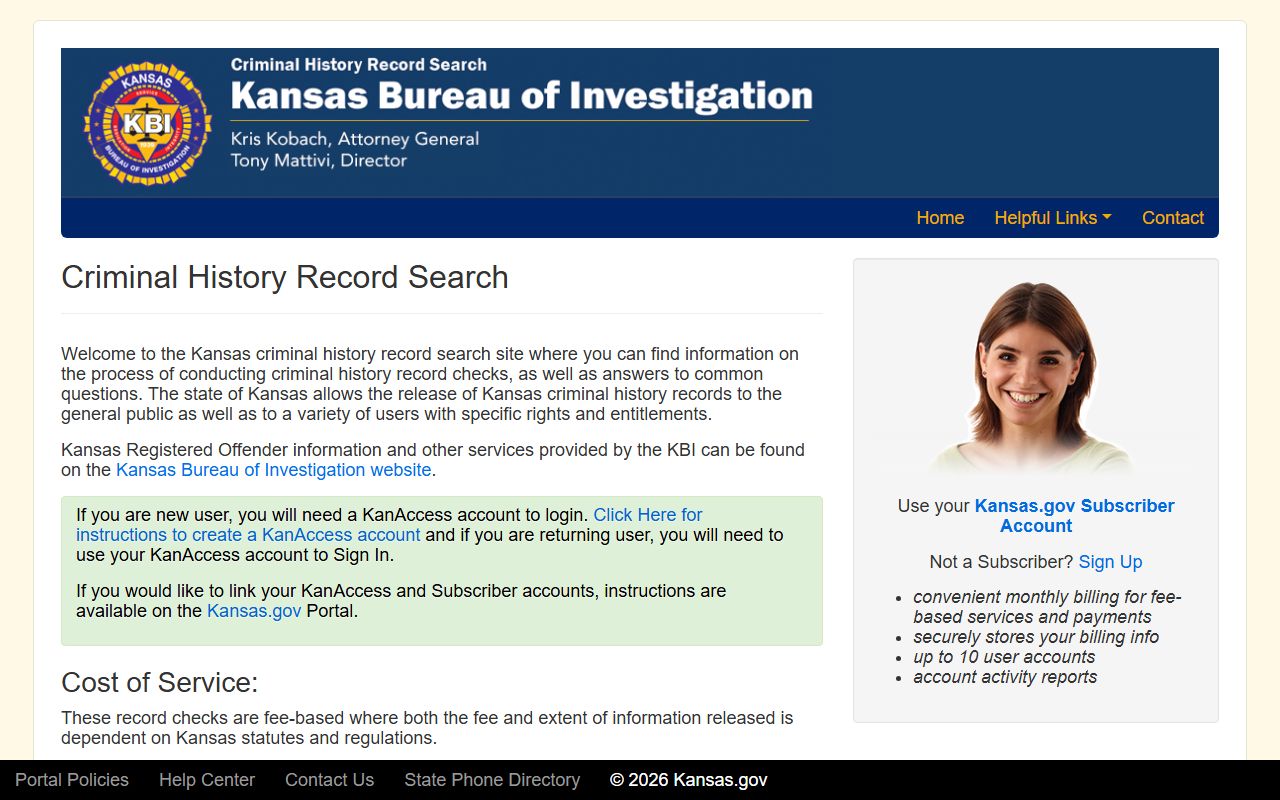
Use the KBI route for statewide criminal-history records, and use District Court channels for the filed McPherson County criminal case.
McPherson County Criminal Case Flow
A criminal court record grows in stages. The charge starts the court file, but later docket events show how the case changed. The arraignment records the plea. Pretrial entries can show bond, counsel, motions, discovery issues, continuances, or hearings. A plea or trial entry shows how the case was resolved. The disposition and sentence explain the outcome, which may include jail, prison, probation, fines, restitution, diversion, dismissal, or other court terms.
Case flow: Charges Filed › Arraignment › Pretrial / Motions › Plea or Trial › Disposition › Sentencing
| Stage | What Happens |
|---|---|
| Charges filed | The prosecutor files a complaint or information and the court opens the criminal case file. |
| Arraignment | The charge is formally addressed and the defendant enters a plea. |
| Pretrial / motions | The court handles bond, counsel, discovery, continuances, legal motions, and hearing settings. |
| Plea or trial | The case is resolved by plea, trial verdict, dismissal, diversion path, or other court action. |
| Disposition and sentencing | The final outcome and sentence terms are entered, including probation, fines, restitution, jail, or prison when ordered. |
What McPherson County Criminal Records Show
The criminal case file shows more than the initial allegation. It can show the State of Kansas as plaintiff, the defendant, attorneys, charge descriptions, severity, bond, hearing events, motions, journal entries, pleas, trial settings, disposition, sentence, financial obligations, probation, restitution, and warrant-related entries when public. It may also show amended, reduced, dismissed, or resolved charges. Some entries are only summaries, so a certified document request may be needed for legal use.
| Field | What It Shows |
|---|---|
| Case number | The District Court identifier used to locate the criminal case record. |
| Defendant | The person charged in the criminal case, subject to identity confirmation. |
| Charges | Alleged offenses as filed, amended, reduced, dismissed, or resolved in court. |
| Bond | Release conditions, bond amount, or appearance requirements when public. |
| Plea | Guilty, not guilty, no contest, or other formal plea entry. |
| Disposition | The case or charge result, such as dismissed, acquitted, convicted, diverted, or closed. |
| Sentence | Jail, prison, probation, fines, restitution, costs, or other ordered terms. |
The Kansas Department of Corrections source is relevant after a sentence leads to state custody or supervision, but it is not the filing court's criminal case record.

District Court records show how the sentence was imposed, while KDOC records relate to state correctional custody and supervision after sentencing.
McPherson County Charges vs Convictions
A charge is an accusation filed in court. A conviction is a final adjudication of guilt by plea or verdict. McPherson County criminal court records can show charges that never became convictions because they were dismissed, amended, reduced, resolved through diversion, or ended in acquittal. The county jail roster disclaimer makes the same core point in the custody context: all individuals are presumed innocent unless convicted in court.
| Charge | Conviction | |
|---|---|---|
| Meaning | An allegation filed by the prosecutor or shown from a citation or complaint. | A finding of guilt by plea, verdict, or other qualifying adjudication. |
| Timing | Appears early in the criminal case and may change. | Appears after plea, trial, or final court action. |
| Record use | Shows what was alleged and how the allegation moved through court. | Shows the final guilt outcome and supports sentencing entries. |
| Risk | Can be mistaken for guilt if read without the disposition. | Still may be affected by appeal, expungement, or later court order. |
For a closer look at the arrest-to-charge path, use the McPherson County arrest records and court charges page. The full court file and final outcome belong here.
County Attorney and Diversion Records
The McPherson County Attorney's Office prosecutes state-law criminal cases, juvenile matters, care and treatment proceedings, Kansas Consumer Protection Act enforcement, and state criminal appeals in Kansas appellate courts. The office is at 101 N. Main St., Suite 201, McPherson, KS 67460, phone 620-241-1027. The county page names Jennifer Wyatt as County Attorney and Hunter Johnson as Assistant or Deputy County Attorney. Once the prosecutor files charges, the District Court record tracks the court side of the case.
Diversion is especially important when reading criminal records. The County Attorney page describes a comprehensive Diversion Program for first-time offenders, victim repayment, accountability, and addressing underlying causes of behavior. Diversion applications are available for criminal, juvenile, DUI, and traffic matters. Successful diversion may end in dismissal rather than conviction, but diversion records and later expungement questions still depend on Kansas law and the court file.
McPherson County Attorney
101 N. Main St., Suite 201
McPherson, KS 67460
620-241-1027
Sealed and Expunged Criminal Records
Sealed and expunged records are not ordinary public criminal court records. A sealed record is restricted from routine public access by law or court order. An expunged record has public access limited through a statutory process, but expungement is not always the same as physical destruction. Kansas expungement can apply to qualifying convictions, arrest records, diversion agreements, and juvenile or minor records under different statutes and procedures.
| Sealed | Expunged | |
|---|---|---|
| Public visibility | Hidden from ordinary public access. | Limited from public access after a qualifying court process. |
| How it happens | By law, court rule, or court order tied to the record type. | By petition and statutory findings under Kansas expungement laws. |
| Examples | Juvenile, adoption, mental-health, protected, or sealed case material. | Qualifying conviction, arrest, diversion, juvenile, or wrongful-conviction records. |
| Important limit | Some parties, courts, or agencies may still have access. | Some agencies or circumstances can still require disclosure or permit access. |
Kansas sources point to K.S.A. 21-6614 for convictions and diversions, K.S.A. 22-2410 for arrest records, K.S.A. 38-2312 for minors, and K.S.A. 60-5004 for wrongfully convicted persons. For McPherson County District Court cases, the petition generally belongs with the court connected to the case.
Public Access to McPherson Criminal Records
Public criminal court access is governed by Kansas court rules, Kansas public-record law, and record-specific confidentiality rules. Kansas Supreme Court Rule 22 governs public electronic district and appellate case records. K.S.A. 45-215 through 45-223 are the Kansas Open Records Act sections, including the policy of access, inspection process, fees, and exceptions. KORA does not open sealed, juvenile, expunged, mental-health, or otherwise restricted court material.
Registered offender searches are also separate from criminal court case files. The KBI registered offender search is a public registry entry point and disclaimer source, but the research notes that it is not a criminal-history check and fingerprint verification is the only positive identification method.
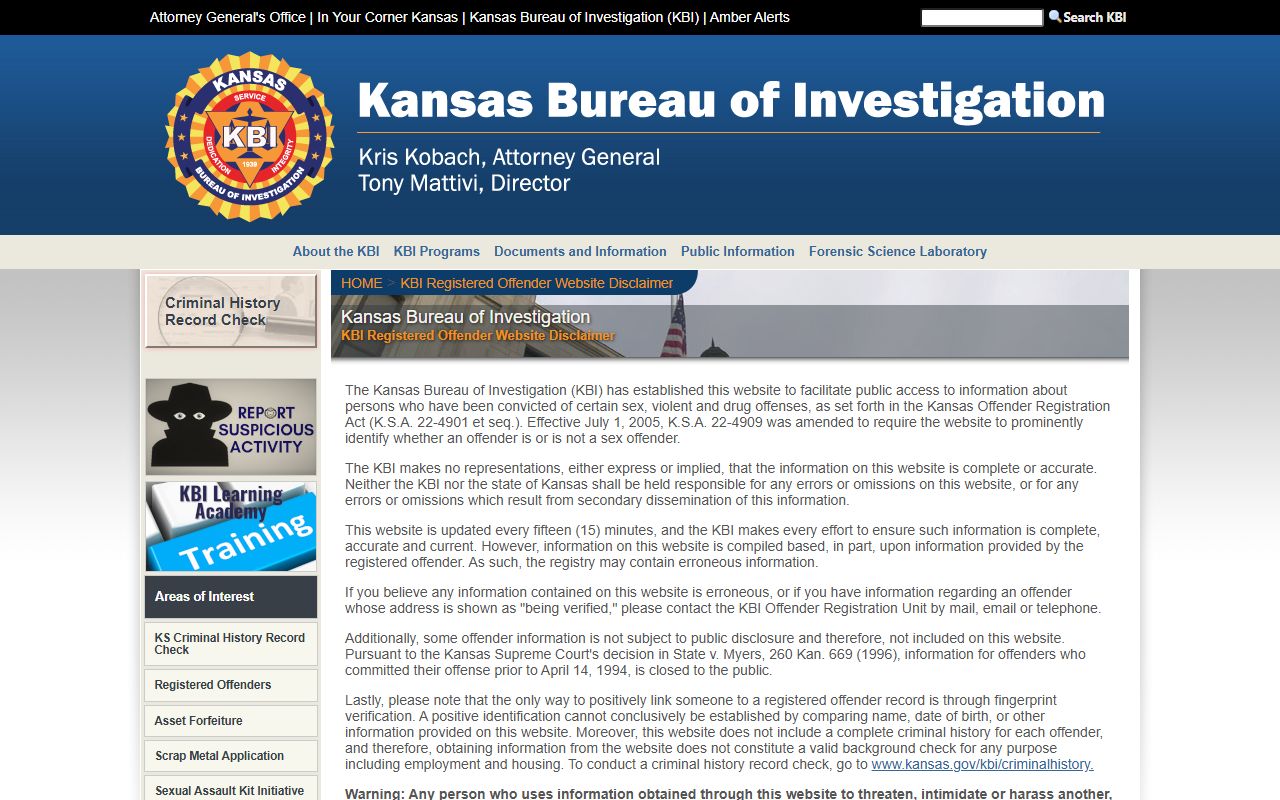
A registry result, criminal-history check, jail roster, and District Court case record each answer a different question.
Custody Notifications and Case Status
Kansas VINE is not a criminal court docket, but it can help with custody-status updates and victim notification. The research identifies the Kansas VINE portal and the Attorney General's VINE information as sources for free custody-status search and notifications by internet, telephone, or email. Use it when the question is whether a person is in custody or whether a custody status has changed, not when the question is the final court disposition.
Kansas VINE is one of the official custody notification channels identified in the research.

For sentencing, plea, or dismissal proof, return to the District Court case file instead of relying on a custody notice.
Restricted McPherson County Criminal Records
Restricted criminal information includes juvenile records, sealed cases, expunged records, mental-health or care-and-treatment material, protected victim details, medical data, personal identifiers, protected addresses, and active criminal investigation records. County KORA materials list criminal investigation records among categories that may be closed. A court case may also show redactions even when the docket is public. That is why a search result can appear incomplete without being an error.
The local clerk channel is the practical way to confirm whether a missing criminal case is unavailable, sealed, expunged, municipal, too old for the online system, or only accessible through a courthouse terminal. The Clerk of the District Court is at 117 N. Maple, P.O. Box 1106, McPherson, KS 67460, phone 620-241-3422. For municipal ordinance criminal matters, McPherson Municipal Court is at 113 N. Ash, phone 620-245-2507.
Important: Criminal court records should be verified with the issuing court before relying on a charge, sentence, or disposition.